What is this episode about?
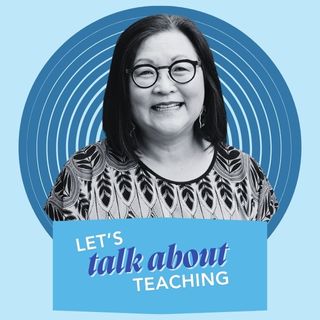
In this episode, Professor Jin-Sun Yoon (she/they) from the School of Child and Youth Care talks about what teaching means to them (2:29) and the courses they work with (5:10). They share how they think about presence in online learning (7:01), including how “learning in place” shapes their approach to supporting students (10:15).
Professor Jin-Sun discusses strategies they use to make themselves and their students more visible and engaged with one another (13:23), reflects on a moment of deep connection in their teaching (18:35), and describes how their commitments to decolonization, Indigenization, and equity guide their relationships with students (20:13). They also speak to how they maintain presence while sustaining healthy boundaries and a balanced workload (25:08). The episode closes with Professor Jin-Sun’s advice for new instructors on cultivating meaningful presence online (27:31).
Meet our guest
Jin-Sun Yoon (she/they) is a Teaching Professor in UVic’s School of Child & Youth Care and has been a faculty member with the university since 2002. Their expertise and research interests include critical identity development, racial literacy, racialized settler–Indigenous relations, JEDI training (Justice, Equity, Decolonization, Intersectionality) and decolonizing praxis in health and education. This transdisciplinary work is informed by their professional experiences in Korea, Japan, Germany, England and Denmark and a collaboration with the leadership of the ȽÁU, WELṈEW̱ Tribal School.
Professor Yoon’s expansive work in teaching and community leadership has been recognized both locally and nationally with several awards that include UVic’s Teaching Excellence Award, UVic’s Harry Hickman Award for Teaching Excellence and Educational Leadership, and Canada’s prestigious 3M National Teaching Fellowship for work in SoTL and higher education, as well as more than a dozen keynote addresses at national conferences.
Professor Yoon’s lifelong commitment to justice, equity, diversity, decolonization, and inclusion is also seen through their many leadership roles, including those held with antidote: Multiracial and Indigenous Girls and Women’s Network, Minority and Indigenous Women’s Instructor Network, the Academic Women’s Caucus, the Vancouver Island Regional Advisory Council, the Ethno-Cultural Advisory Council for the BC Ministry of Children and Family Development, the Inter-Cultural Association of Greater Victoria and several university, government, and community committees. Read more about Jin-Sun Yoon’s here.
Explore resources
Transcript
JIEXING HU
Welcome to the ‘Let’s Talk about Teaching’ Podcast, a podcast dedicated to exploring innovative teaching practices in post-secondary education, examining the day-to-day challenges of implementing and uncovering strategies for success. We’re excited to take this conversation further and continue sharing wonderful stories and insights from educators here at UVic that inspire us to reflect and grow.
My name is Jiexing, and my pronouns are she/her. I am a Learning Designer with Learning and Teaching Innovation, also known as LTI at the University of Victoria.
JEREMY WINTRINGER
And I am your co-host, Jeremy. My pronouns are he/him and I am a Curriculum Designer with LTI specializing in large class pedagogy.
JIEXING HU
Before we begin, we would like to acknowledge and show respect to the Lək̓ʷəŋən (Songhees and Xʷsepsəm/Esquimalt) Peoples on whose territory the university stands, and the Lək̓ʷəŋən and W̱SÁNEĆ Peoples whose historical relationships with the land continue to this day.
In this episode, ‘Instructor and Student Presence in Online Teaching’, we explore practices instructors can use to cultivate presence in online courses – helping both themselves and their students feel more connected and engaged.
JEREMY WINTRINGER
Today, we’re joined by Professor Jin-Sun Yoon who currently teaches at UVic’s School of Child & Youth Care and has been a faculty member here since 2002. Their areas of expertise include critical identity development; racial literacy; settler-Indigenous relations; Justice, Equity, Decolonization & Intersectionality training; and decolonizing praxis in health and education.
Professor Yoon’s accomplishments have been recognized both locally and nationally, including UVic’s Harry Hickman Award for Teaching Excellence and Educational Leadership and the prestigious 3M National Teaching Fellowship. They have been a keynote presenter at more than a dozen national conferences and actively serve in several leadership roles with university, government, and non-profit groups, a list of which can be found in her bio on our website.
Transition Music
JEREMY WINTRINGER
Hello, professor. Welcome to the podcast.
JIN-SUN YOON
Hello, it’s good to be here.
JEREMY WINTRINGER
Before we begin our conversation about instructor and student presence and online teaching, could you tell us a little more about yourself and share with us about how long you’ve been teaching and what you love about it?
JIN-SUN YOON
Gamsahamnida (감사합니다; Thank You) ! It’s an honor to be here with you both, Thank you very much for the invitation. So, my name’s Jin-Sun Yoon and I go by she/they pronouns. And, I haven’t always gone by my Korean name, but that’s a little bit of a story later on. But there are two things you need to know about me in teaching, and that is, I was a really bad student my first and 2nd year. And I took some time off to work and travel, and that is really when I became a better student when I came back because I had more focus. So, as a result, I know that there are not only one type of keen student, but that there are students who are disengaged like I was. Now, it wasn’t online, but, you know, back then, It was all on campus, but I do know that perspective. And the second thing you need to know about me is I’m an accidental academic. I never planned to be a university professor at all. And I actually got scouted in 1998 by a professor who had heard about me and came to one of my talks and he asked me if I would like to teach. Uh, an interdisciplinary course. So that’s actually how I started my academic career. And I think as far as what I love about teaching, I think it has a lot to do with getting to know people who are invested in social justice. And for me, it’s truly a privilege to be able to help create practitioners, especially with the younger generation who are working with young children and their families or caregivers, or with young and middle school age and then youth. And that influence on that next generation on becoming a more equitable society. is so important to me and I truly feel like it’s such a gift to be here because I never ever expected that I would be a professor at a university, especially one as big and prestigious as the University of Victoria.
JIEXING HU
Thank you. So, to give our listeners more context, can you tell us a bit about which course you teach? Like how example, how large they are?
JIN-SUN YOON
Well, I’m in a program and I have taught like 14 different courses. And our courses are typically like theory-based, or they’re, uh, practice-based, or they’re practicum, so applied. Uh, so they kind of go in those three general areas. I’ve taught in all of them. And our courses are about 100 people for the first and sometimes 2nd year because they’re open to everyone and it’s there where students will say, wow, I want to get into the child and youth care program, so they have to apply. Yeah, our program requires us to really get to know our students. And that is a lot different being on campus, where you see them in the flesh, and students who are online that we may not always See, but we do live seminars, so that we do get a chance to see them in our practicum courses, but not necessarily in other courses. My assessment approach depends on the kind of course I’m teaching. And whether it’s through case studies or essays, or journal reflections, or synthesis of course materials, yeah, I, I have lots of different types of methodologies. And then I actually do self-assessments where students have to take responsibility. As a student, I try to create a lot of options so that they are escape hatches where they are able to skip a week with good grace, and they do take a penalty, but it’s nominal and their dignity and their stress level can be managed that way.
JIEXING HU
So when you think about teaching online, what does it mean to you as an instructor to create presence in those classes?
JIN-SUN YOON
I take a lot of time in the 1st 2 weeks. I have all sorts of notes I keep on them. First of all, I imagine where they are. So a part of how I start every course is. What’s your name? And what’s your preferred name and what does your name mean to you and that you know, it’s a simple question, but it is surprising how many people just like – “uh…..”, you know, so the students who don’t know and typically they’re the face to face students on campus. And they’ll ask their parents and they’ll come back and they’ll say, oh, they told me this, uh, you know, story about how I got my name that I’d never known before. So, and, and the reason why, of course, the meaning of a name means so much to me is because I was given an English name when I came to Canada, and it always felt like a wooden coat, but, you know, something that was going to help, quote unquote, assimilate me. And it was in learning about colonization and even, Korean occupation and colonization and the Korean War and what my parents went through. It got me thinking a lot about the, my name and how my parents gave it to us, and that was honoring them by, uh, reclaiming. Yeah. So my name means true goodness in Korean. And that’s a much easier name to live up to than my sisters who are true beauty and true virtue. But the name thing is important, but when I think about learning in place, I literally imagine where they are, because I always ask them, where are you studying from? Like, where are you, what, what place are you, are you studying? And I always have them name the indigenous lands that they’re on because I think again that’s our accountability, but it helps me imagine where they are like when I know a student is in a ferry community where they can’t get anywhere except by ferry. Uh, that, that makes a big difference for me than when someone who lives across from the University of Victoria, but they’re doing it online, you know, or someone who’s in Langford, like, this kind of knowledge really helps for me to know where they are learning. And I don’t know why, but it’s really important to me. And of course, with the global access now, we’ve had Canadians who are studying in Berlin, China, uh, Switzerland, Ireland, these are places that are just recent students, you know, and I believe I have a Chinese student who is studying from China. Whereas in the past, I’d be like, well, that’s an international student, they have to come here. So, I kinda always feel like we’re in the forefront of new discovery. Yeah, I’m very proud of that in our department.
JEREMY WINTRINGER
When you were talking about online courses, you talked about students who are learning in place, and I was wondering if you could tell us a little more about that view and, and how it developed.
JIN-SUN YOON
So, learning in place offers the opportunity for people to have multiple roles in their own communities, you know, whether they’re parents, uh, workers, or caregivers, or And I should say, because many times they are working and they have families and they have to do things. So instead of that old school come to university, you know, set up a new residence here in Victoria and pay uh more rent and, you know, all of that people have the convenience of working in their own communities, especially in practicum, and it’s been really great and I’ve. Really noticed like our online students tend to be more mature and are people who’ve been working for a long time but just couldn’t quite get that degree because they had the kids and they just couldn’t leave their communities. So. Learning in place, I think also has global applications and most are Canadian students who are going to learn in place in a different country or a different part of Canada because they want to expand their horizons. They don’t want to just know the community that they were raised in, but other communities and learning in place really allows that. So, I think that kind of option is so beautiful and, just creates a much more equitable access. Our department has actually been doing distance and distributed learning for about 50 years. And, it started off as correspondence, you know, where they got mailed a package, and then they mailed it back, their assignments back to us. In 2003, the year after I started. I did the first full online course, all the bells and whistles, and I think about it back then we had an instructional designer specific to that course and a tech, uh in-house tech. So, I had so much support. It was awesome. And, learning in place became this, I think, a much more equitable way of offering education, particularly for those in rural and indigenous communities, because we have, as a faculty group, really committed to supporting indigenous self-determination, self-governance and autonomy. And this is something that we really hold dear to our particular complement of faculty nowadays is to say, how are we doing this? How does that show up? And, we’re always holding each other accountable to that as well as to students.
JEREMY WINTRINGER
Well, you’ve touched a little bit on this next question already, but I feel like we’re a little bit more. So, you know, how do we do this? What are the things that you as an instructor do in online courses that make yourself and your students more visible and engaged, with each other?
JIN-SUN YOON
Well, I start with an orientation quiz, and that then gives them an opportunity to look through the course site, uh, ensures that they’ve actually reviewed the course syllabus, but more importantly, at the end, it asks them, what do I need to know about them that’ll help them in their learning journey. And when I read that someone. Is, for example, neurodiverse and would really like to have visuals, then I can offer that in a different way. The other thing I do is I offer options for discussion formats so that students can in a group use Zoom as a methodology of having live discussions. So I finally figured out a method that works and they record it. They put that recording in their private discussion space, so then I can verify their discussion, but they’re always summarizing to share with the rest of the group. I do create these kind of escape hatches so that students can skip a weekly journal or something like that because life is getting too hard, they’re sick, they, their kids are sick, they’re. They have to work more, whatever, and I just think it’s important for me to, uh, ensure that there’s dignity for students and not shaming and putting this undue pressure because it’s possible that I don’t really take academia seriously as I should. I think there’s so much learning that happens and. In our lives and having worked in the community as a social service provider and as a counselor, I have met genius people but they’re never gonna make it to a university, you know, so I always, that’s very humbling and I know that some of the students have come through really difficult times to get here so I never wanna think that everyone’s entitled and privileged and. You know, have easy access. I always see everyone is having their personal struggles and, and some very systemic struggles. I’ve created the things that I’ve called audio cast because, they’re kind of more like narrated PowerPoints, but, sometimes I do little cameos. But this way, my students online can hear my voice and really feel me being there. And It’s so exciting because I hear that, them engaging through what they write about, to say, oh, that, you know, in the audio cast, I learned about this, and that excited me to learn more about it on my own. And, I always say how many minutes it’s going to be. And I embed, some videos that might be able to articulate more of what I’m talking about in a short visual way, instead of me lecturing at them. It’s like, oh, look at this beautiful video clip that’s like 2 minutes long that will help. And so that’s another way that I’m engaging the students and I never ever thought I could be intimidating, but. People have told me I can be, so I try to, anticipate that. And in terms of racial stereotyping, they often expect me to have an accent, they expect me to be, you know, shy and, you know, all the kind of stereotypes. And so, by hearing me, by seeing me, by, modeling goofiness and, and joy. I feel like that makes me human and whole to them. And I know, in terms of brain chemistry, when you laugh, when you smile, you’re doing such good things for your body, and for the energy between people, right? I just don’t see why we wouldn’t want to encourage that. And that, I guess, maybe I should call it joyful teaching or something. I really enjoy it. And I guess finally, it’s about recognizing, yeah, these students as whole people and not just as, you know, I don’t know, I, I just don’t ever want to think of someone in one role. I want to see them in their fullness and that’s the beauty of Zoom, I think, is that I have open office hours, which I have after this today, and they’ll show up just to say hi and just to tell me about themselves. And sometimes, you know, a student will say, well, this is my ultimate goal, like to do graduate school. And so I can support them in, in, oh, well, you, you know, you should look into these kind of schools, because that might be where, a lot of your interest and strengths could be, uh, appreciated. So it’s really, it’s such an honor to be an instructor or a professor.
JIEXING HU
Can you recall a moment when you felt a deep connection between yourself and your students? And what made that moment between you possible?
JIN-SUN YOON
I think the deep connection is often when I am able to recognize the strength of a person instead of maybe the deficit that they are seen through. I just did one assignment recently on observing someone who seems quite different from you and, um, what kind of assumptions are you making? And you know, a student said, oh, I, I realized I was on the bus and I thought, 00 I haven’t done this yet. So she said that the bus was quite empty. So there was this guy, this average guy who was on it, and I said, Oh well, um, so what assumptions did you make? Well, he was just average, but what does that mean? And she started to really think why, what does average mean? He was white, he was tallish, he was youngish, he was, you know, kind of the. People she sees as average. And so what are the assumptions there? And she was like, oh wow, yeah, this links into our knowledge about white supremacy, that whiteness is a default and everyone else is, is, um, you know, racially identified or they’re identified by, you know, moments of saliency like, oh, that large person or that black person or that disabled person. And this is how assumptions have to be understood in our practice, so we’re not replicating them out of unconscious bias into a conscious bias, and then to change that bias into how we can practice in a different way.
JEREMY WINTRINGER
It’s clear that you have a demonstrated commitment to things like decolonization and indigenization and bringing equity into the student experience. How do these commitments, um, shape the presence and the relationships you and the students have in the online setting?
JIN-SUN YOON
In the online setting, well, I think a big part of it is our current complement of faculty that indigenization and decolonization was central to hiring them. So the beauty is when you have a, a critical mass of people upholding these values, then it’s no longer about the one racialized person and the one indigenous person, you know, that we actually have a threshold of racialized people and of indigenous, um, people who are both in our faculty and, and staff. So, We’re in many ways modeling what we want to see. A lot of racialized students are really attracted to talking to me because they feel seen and heard where they might have a lot more hesitancy. And also because like my, my baby course, the course that is my baby, is, um, on critical identity development. And I think, um, you know, race is so difficult for people in. Race Polite Canada, you know, to talk about and so they tend to talk to me about stuff that they just can’t talk to other people about and I would say international students are a big one, and, um, they often don’t feel like they get the same treatment and we’re just talking about that in class because 4 of the racialized students were the last ones picked in a group, so they’re in a group on there together. And uh we talked about that, whereas maybe in other courses it would be just kind of a silent shame or, or, you know, anxiety. So, um. I think my biggest role is in role modeling. Role modeling, empathy and compassion and kindness and so when I, I’ve recently got a number of emails back from students thanking me for my concern for them. I try to tell them about this idea of um the imprint and I do this thing where. I draw something on a pad of paper and that it imprints on other pages, and that a part of oral culture was that imprinting, and that students, when they hear that term again, instead of rolling their eyes, they might think, how do I explain that to someone else? and students have told me that they. They are, feel much more confident and capable of having good, structured arguments now at the family Thanksgiving table, you know, where they couldn’t do it before, they just get kind of, you know, upset about some things, but they didn’t know how to broach it with love and kindness and compassion, rather than from anger and hostility. So, yeah.
JEREMY WINTRINGER
As a follow up, do you encourage your online students ever to engage on these topics with people in their lives or in their community or in their families as you mentioned a moment ago?
JIN-SUN YOON
Absolutely. It’s really exciting for me to hear what it’s like and then they have to say things like, well, here’s the reason why I live in a very white community. So, we don’t have a lot of racial difference. Whereas other people say, oh, where I am, I’m white, but I’m the minority. And, and so we can then talk about numeric minority versus the colonial settler default system, you know. So, it helps the student. I, I really like students asking me questions, and they’ll email me questions. And, uh, I used to have it where I had it on the course site. But I found it very cumbersome, so I’d rather have a student email me a question. What I do then is I put it as student question and it’s anonymous, and then it says Jin Sen’s response. And so then I send it out as an announcement, and then they can see. What another student has said, or their own even, and they go, oh, that’s me, but nobody knows it. And then I can respond, and that seems to have taken away a lot of that fear of, of sounding stupid or asking a dumb question, you know, which I find a lot of people are just so afraid of being judged for being dumb. And, and I will never say there is never a dumb question. There are. Because if you read the syllabus, you know, I won’t, I won’t out someone like that. But you’re just trying to give them constant carrots and incentives rather than the stick, you know, to punish from behind.
JEREMY WINTRINGER
It sounds like we’re hearing a lot about the depth of the interaction between you and the students in your courses and the frequency in some cases of those connections. And so a question that occurs to me is, you know, how do you build all of this while also maintaining healthy boundaries and a balanced workload?
JIN-SUN YOON
I think this question is phenomenal. Because, you know, for. Almost 20 years, I had two children that I raised and That came with a lot of work demands. Those were pretty tough years. Um, but I think that I also had to become really disciplined. And I told my kids, if I am not present there with my soul. You need to call me on that. And that’s been really helpful because then when I’m with them, it’s like my cup fills up, and when I’m not with them, my cup fills up. But I, I 100% want to say that the load is really, really heavy for mother scholars. I know that the first time I teach a course, It takes at least 2 years, if not 3 years, to finally let it kind of run on its own. So that’s partly how I could do it because I did negotiate to teach the same courses at times so that I could. You know, kind of coast on that and not have to spend all my time doing new course development. That’s a lot of work. And they still want you to do grants, and they want you to do public presentations, and, you know, they have a lot of, and publications, there’s a lot of demand. But, um, I think, uh, refining content is an important part of things, but it’s nothing like starting a course from scratch. I do think healthy boundaries are kind of a red herring. I think it puts the onus on the individual when we actually need to think about healthy work environments and expectations. And, like I said, I create escape hatches, and I think we need to create escape hatches for our scholars and academics and our staff, you know, so that we can give people these ways that, uh, they can have that break, because, like I said, I think it’s about healthy. Unhealthy work environments and unhealthy work expectations, that is really problematic.
JIEXING HU
Thank you. As we’re reaching the end of this podcast, the last question we have is, what is one piece of advice you would give to a new instructor about creating better presence in their online course?
JIN-SUN YOON
I’d say the most concrete advice I can give is about really getting to know as much information without being creepy, so that students really feel like you get them. I think it’s always a multiple approach thing, but that first two weeks, I find is so critical in retention and just starting off in a good way.
(Response) Thank you.
JEREMY WINTRINGER
Well, Professor Yun, thank you for taking us through all these different ideas that you have for online teaching and helping us have a deeper appreciation for what is possible, and it’s really inspiring, and I wanna thank you on behalf of both of us for all that you’re also giving to our community at UVic both as a faculty member and as a leader and just, you know, within the community. It’s been wonderful getting to know you better and getting to know your work.
JIN-SUN YOON
Thank you
JIEXING HU
That’s the end of today’s conversation. We hope the conversation we have shared has proven interesting and helpful. Make sure to visit our Teach Anywhere website at teachanywhere.uvic.ca, where you can learn more about teaching and learning at UVic. Stay tuned for more great episodes on learning and teaching practices.
JIN-SUN YOON
Bye. Gamsahamnida (감사합니다) !
Credits
-
Hosts: Jiexing Hu (She/her) & Jeremy Wintringer (he/him)
-
Guest: Professor Jin-Sun Yoon (She/they)
-
Technical Production: Jiexing Hu & Sean Weeks
-
Transcript Preparation: Jiexing Hu
-
Theme music: “freesound1.wav” by freezound5 (https://freesound.org/people/freezound5/sounds/588258/) and “sonically_sound.wav” by freezound5 (https://freesound.org/people/sonically_sound/sounds/624643/). Available for use under the CC0 1.0 Public Domain Dedication at freesound.org.
Listen to other episodes

Inclusive and Strength-based Teaching Strategies with Dr. Bruce Ravelli
What is this episode about? In this episode, Inclusive and Strength-Based Teaching Strategies, Dr. Bruce Ravelli shares his philosophy and practices for fostering a student-centered, inclusive learning environment. He begins by introducing the courses he...
Time is On Your Side: A Discussion of Universal Extended Time in Assessments (Part 1 with Dr. LillAnne Jackson)
What is this episode about? In this first episode of our series, ‘Time is on Your Side’, Dr. LillAnne Jackson, shares her perspective and experience in supporting the integration of Universal Extended Time in exams. She begins by clarifying the terminology used in her...
Time is On Your Side: A Discussion of Universal Extended Time in Assessments (Part 2 with Dr. Breanna Lawrence)
What is this episode about? In this second episode of our series, ‘Time is on Your Side’, Dr. Breanna Lawrence shares her experience applying Universal Extended Time in asynchronous quizzes to support students' self-regulation and engagement in her course. She begins...